
Designing “Air Traffic Control” for Charge Nurses
How I turned real-time staffing chaos into a daily-use tool with 41% engagement

PROJECT SNAPSHOT
Business impact
42%
DAU/MAU
60%
customer adoption (hospitals)
0% → 30%
mobile adoption in 3 months
Customer impact
+10%
nurse productivity improvement
80%
nurses satisfied with their assignments
90%
nurses are better able to take breaks
Customer feedback
"Patient Assignment was a godsend. It was a challenge for the iQueue team to convince me, I must have said 'no' a hundred times. My nurses also said 'absolutely not, we'll quit if we do this'. I convinced the nurses to trial it for 5 days and the feedback came back an overwhelming success. It's one of the best decisions I've ever made."
Nurse Manager at Lee Health Regional Cancer Center
"All I can say is WOW! We can truly see what a dramatic impact this has on our patient flow and the nursing workload throughout the day. We very quickly identified that this way of doing Patient Assignment is FANTASTIC!!!"
Nurse Manager at Vanderbilt-Ingram Cancer Center
"We gave nurses the choice between using their spreadsheets and Patient Assignment, and they chose to continue using PA because they liked it so much. They haven’t used their spreadsheets in 2 weeks!"
Nurse Manager at MD Anderson Cancer Center
Outcomes
Key retention driver
Competitor replicated the feature
Churning customers asked to keep this feature and turn off the others
Scope
0→1 real-time staffing tool
Served previously underserved 60% segment
My Role
Sole designer → Acting PM
Discovery to delivery
Cross-functional leadership
Timeline
Concept to launch: ~8 months
In infusion centers, patient assignment isn't just scheduling. It determines:
Nurse workload
Patient wait times
Staff satisfaction
Operational efficiency
KEY TAKEAWAY
Yet most charge nurses were managing assignments like air traffic controllers — juggling spreadsheets, whiteboards, and memory.
Meanwhile at

60% of customers were underserved
Churn risk was rising
A previous staffing tool had failed
Competitors were catching up
The initial framing: Increase engagement
Leadership’s goal was clear: bring charge nurses into the app, make it part of their daily workflow, and drive adoption in a segment we had struggled to reach.
Patient assignment looked like the most promising place to start.
It was central to the charge nurse role.
Happened every shift.
Had the kind of frequency that could support daily engagement.
But we already had one important signal from the past: forcing nurses into a rigid workflow didn’t work.
A previous product had tried to impose a more controlled process, and adoption never followed.
That mattered. It told me the challenge wasn’t just to build something for charge nurses.
It was to find a workflow valuable enough to earn repeated use — without repeating the mistake of designing for process over reality.
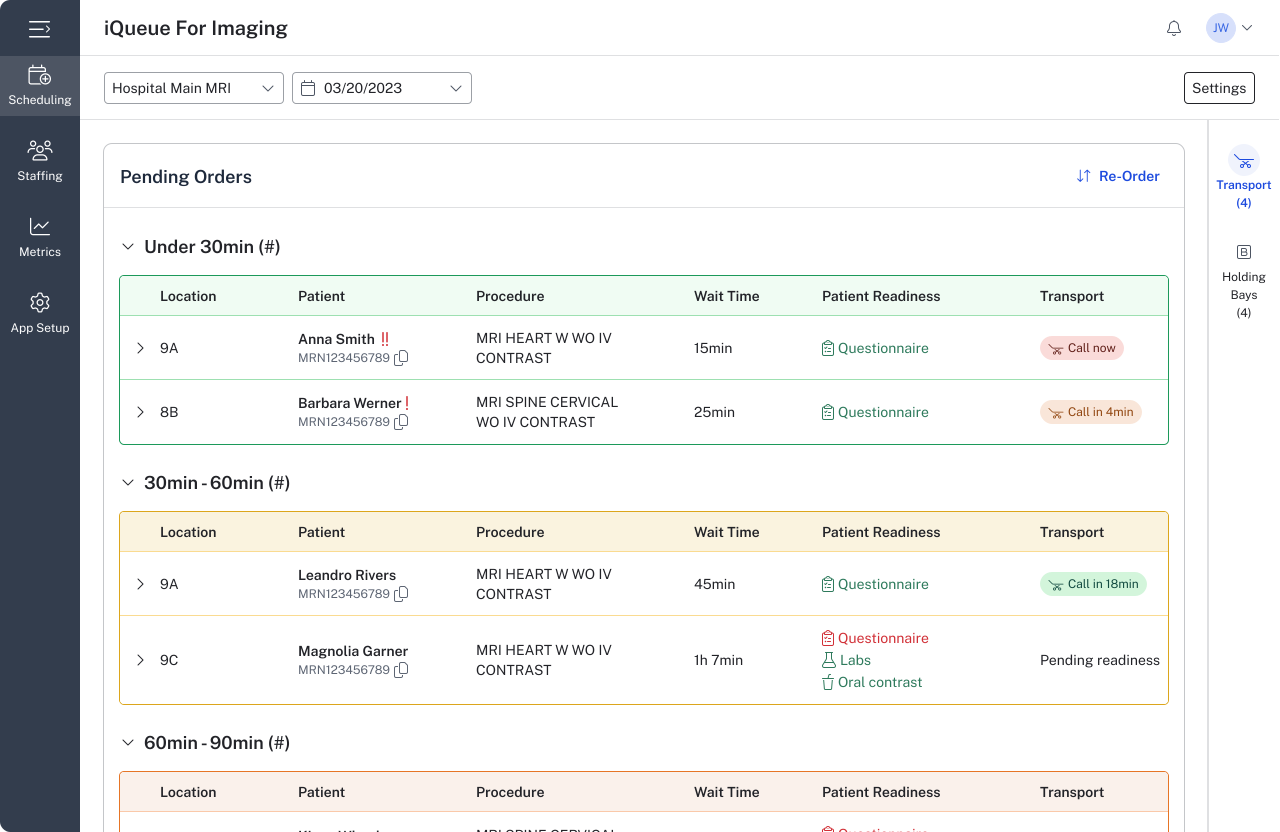
Our previous tool focused on one patient assignment method - pulling - but forcing nurses into a rigid system failed as they sometimes needed to push or pre-assign certain patients.

Failed product's designs that I later repurposed for a quick proof of concept
KEY TAKEAWAY
We knew the business goal. We also knew rigid workflows wouldn’t get us there.
Reframe: from engagement goal to product strategy
That combination is what pushed me to dig deeper and find the tool we could build that would actually earn engagement.
I used product analytics to identify patient assignment as the strongest opportunity.
Then led research to test whether it was important and frequent enough to become a daily-use workflow.
That work showed something deeper: assignment was one of the most chaotic, high-pressure decisions charge nurses made all day.
Shaped by:
Incomplete information.
Constant change.
Responsibility of balancing both patient and staff needs.
That insight became the strategy I pushed the team toward.
So I reframed the problem: The goal wasn't to just increase usage. It was also to reduce decision chaos.
KEY TAKEAWAY
Adoption was the business goal. Reducing decision chaos was the product strategy I used to earn it.
The moment I knew it would work
I tested multiple prototypes, but nurses couldn’t fully imagine the value of a real-time tool. The hesitation wasn’t rejection — it was uncertainty.
Rather than rely on opinions, I proposed building a quick, low-effort proof of concept using real customer data to validate real-world usefulness.
Repurpose an unused page from the failed project
Re-connect real customer data
Build a quick proof-of-concept
During the POC testing, a charge nurse noticed a red timer: 1h 40min since last patient.
She assumed our data was wrong. She checked the EHR. It was correct. Without saying anything, she left.
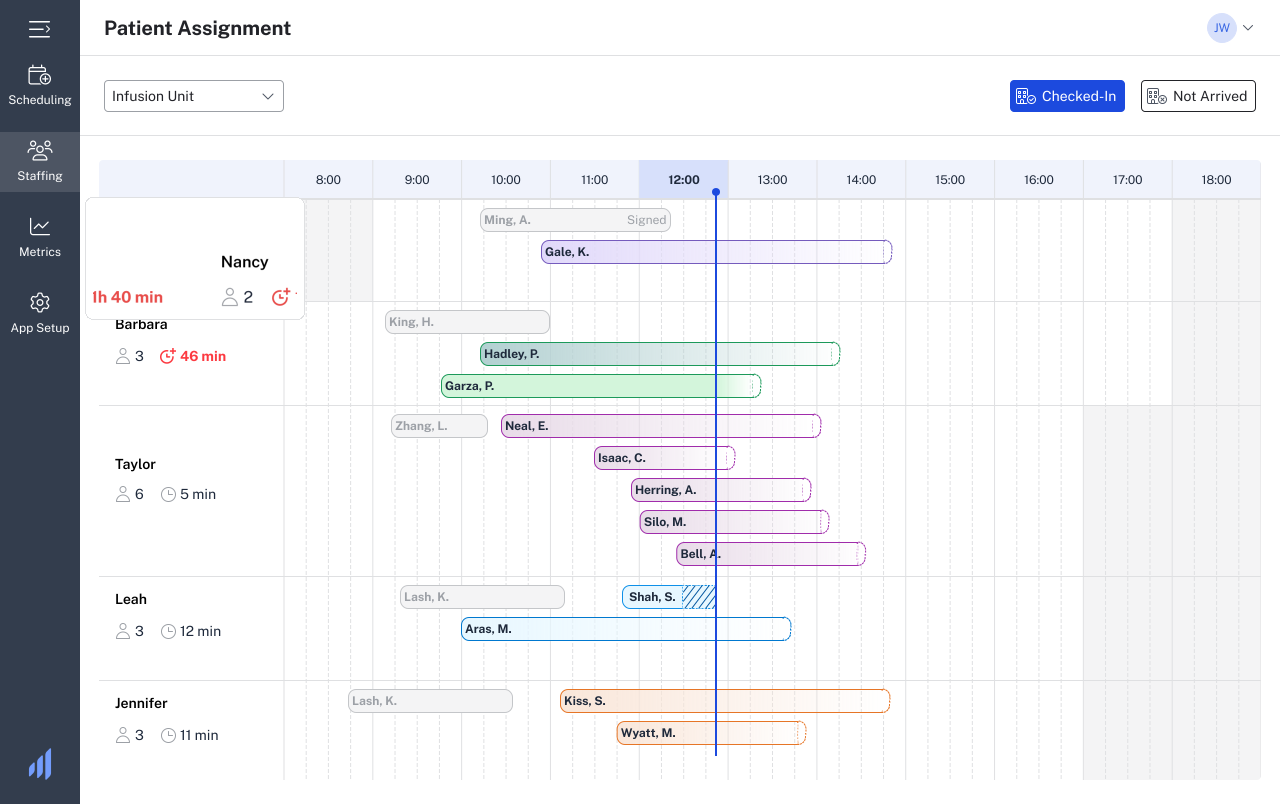
Suddenly, I saw the timer reset. She didn’t need to say the tool worked…
Her behavior proved it. That moment changed the project’s trajectory.

KEY TAKEAWAY
When designing real-time tools, behavior is more reliable than verbal feedback. Seeing the tool in action revealed value that prototypes couldn’t.
The tension: Flexibility vs control
Here’s where real trade-offs appeared:
From the start, I intentionally designed for flexibility
We had already seen a rigid workflow fail, and I wanted this tool to support how nurses actually work — not force a new process onto them.
Stakeholders wanted to protect operational efficiency and ensure ROI
I agreed with the goal — but not the method. Sustainable behavior change comes from adoption, not enforcement.
They proposed adding friction or limiting workflows to steer behavior
While well-intentioned, this risked reducing adoption and repeating past mistakes.
I advocated for meeting nurses where they are. Forcing behavior change had already failed once. I chose:
Flexibility first
I designed the system to support multiple assignment styles — pre-assigning, real-time push, or nurse-driven pull — so teams could adopt the tool without changing their workflow overnight.

Pre-assign
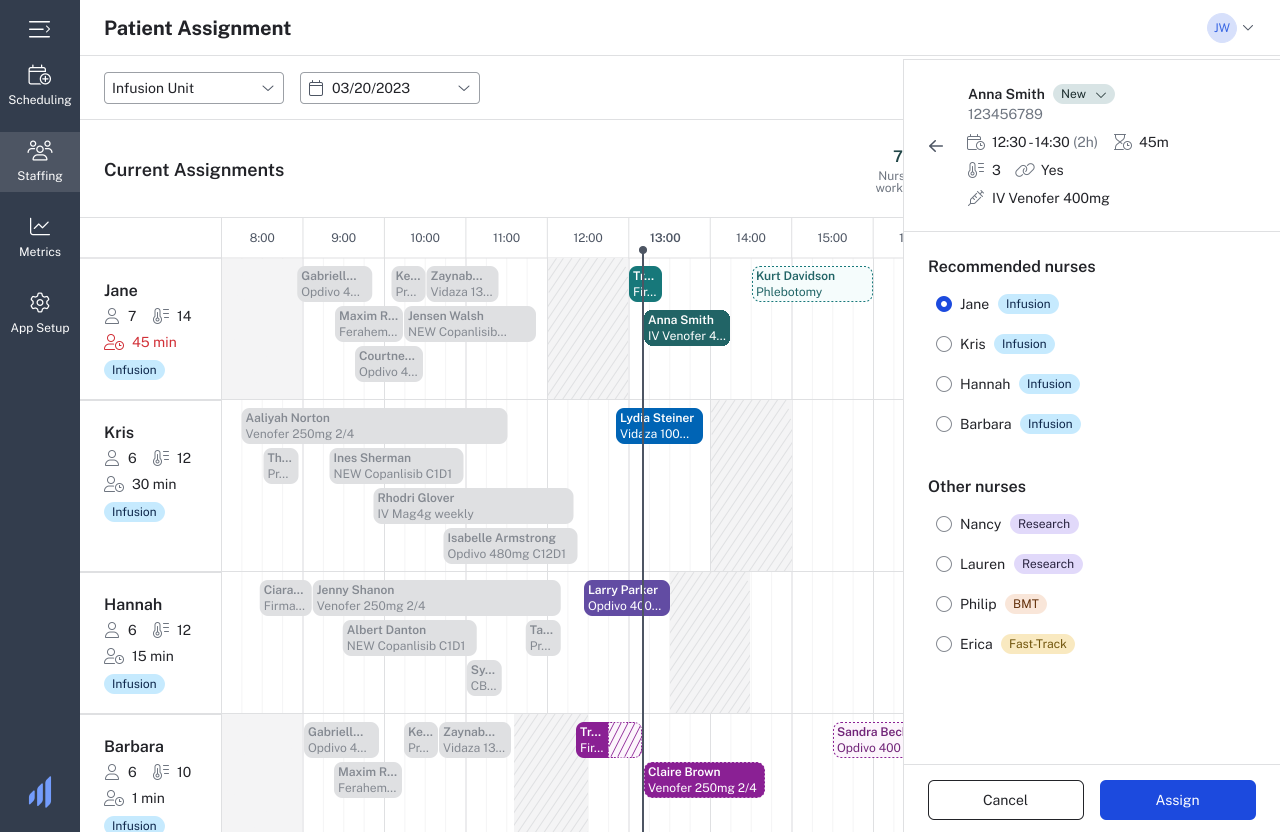
Real-time push

Nurse-driven pull
Optimization later
Instead of enforcing efficiency upfront, I designed Staff Performance metrics to surface productivity, workload balance, and assignment patterns over time.

Monitoring instead of restriction
Rather than limiting behavior, we agreed to monitor outcomes. If flexibility reduced performance, we could introduce guardrails later. In practice, adoption and performance improved — restrictions weren't needed.

KEY TAKEAWAY
I prioritized adoption over theoretical operational efficiency. It worked.
THREE KEY DECISIONS THAT MADE THE PRODUCT WORK
Design for flexibility, not restriction
I surfaced readiness and workload signals helping charge nurses make decisions better while still being in the driver's seat.
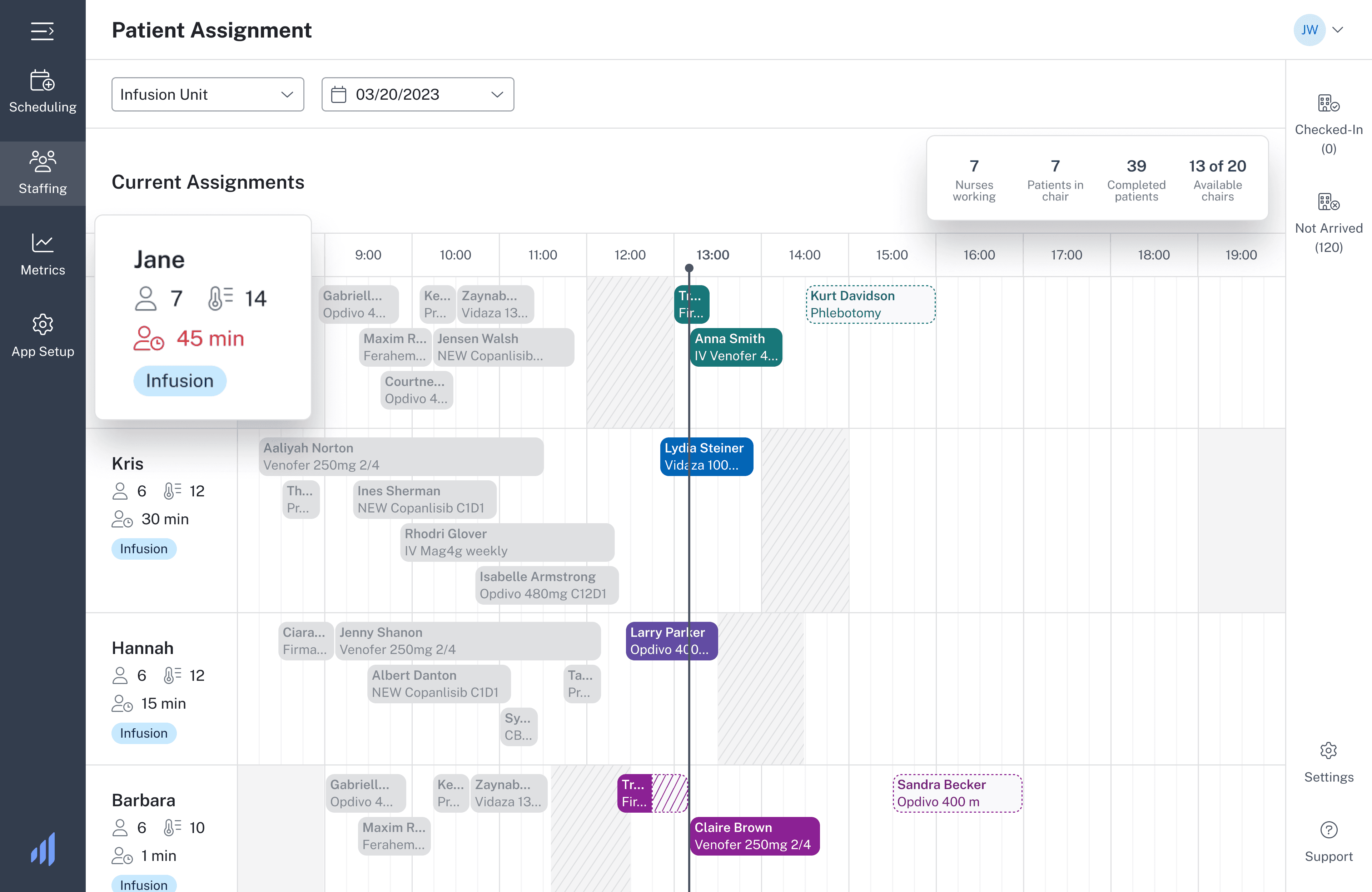
Reduce cognitive load
I simplified information until decisions felt effortless. These decisions drove adoption more than feature complexity.
Validate with behavior, not opinions
The POC prevented blind investment.

Previously failed product was repurposed for creating a quick POC for testing.
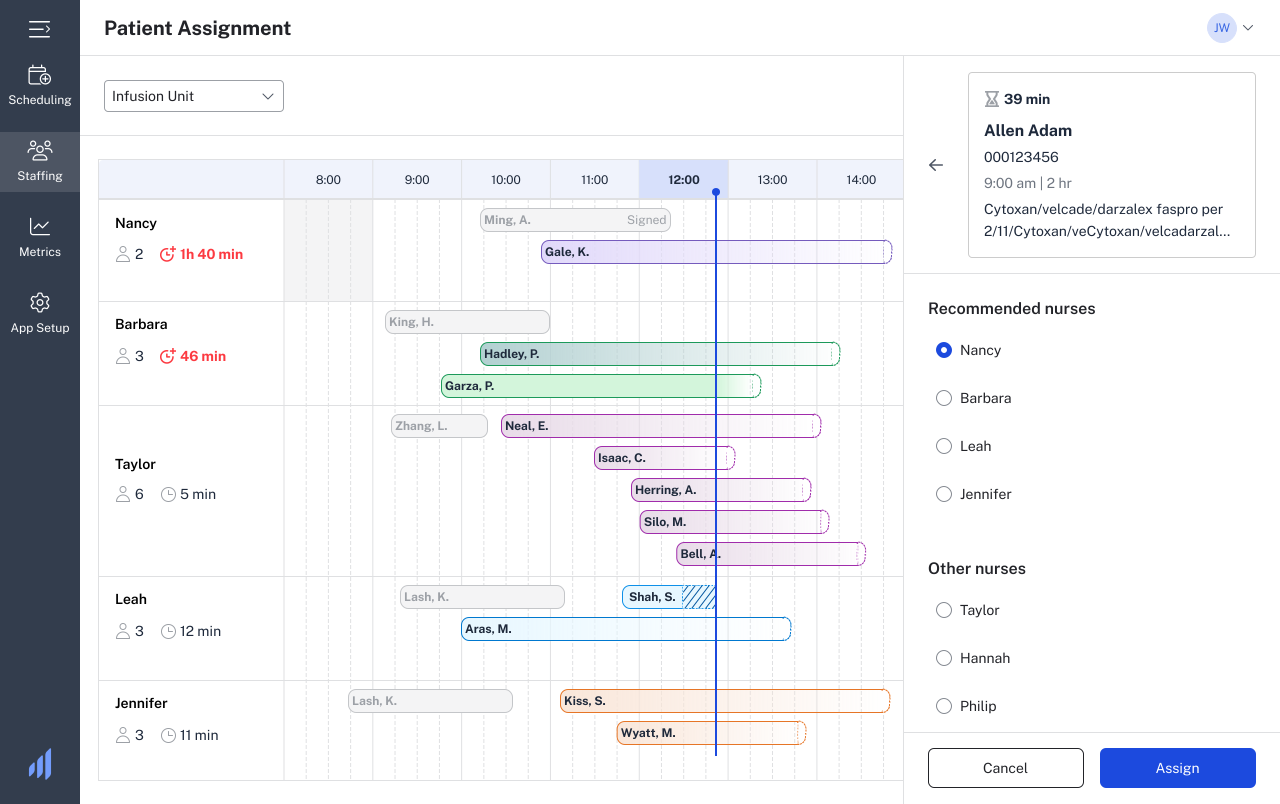
Quick & low-effort POC showing real-time customer data to test the value.
KEY TAKEAWAY
Context reduced tension more effectively than stricter prioritization rules.
When the PM went on leave, I kept the product moving
Right before development, our PM went on leave and a replacement lacked context. To keep momentum:
I prioritized backlog
Sequenced work
Clarified implementation
Aligned engineers

This is an example of how I kept track of the work, priorities and implementation.
Organizational impact
This project shifted how we build products.
My discovery framework became a company staple, shared across teams.
Process driven
Rigid workflows
“We know better”
Research-driven
Listening to reality
Flexible systems
We didn’t just improve staffing. We gave charge nurses a system they could trust.
Patient Assignment worked because it respected the reality of the job. Instead of forcing nurses into a rigid process, it:
Reduced uncertainty.
Surfaced the right signals.
Supported the different ways teams already assigned patients.
That made the product valuable in two ways: it drove strong adoption and engagement, and it became strategically important to the business:
A retention driver,
A competitive differentiator,
One of the clearest examples of how meeting users where they are creates better outcomes than forcing behavior change.
KEY TAKEAWAY
The win wasn't just daily usage. It was trust, adoption, and strategic value.
The kind of product judgment this work required
The hardest part of this project wasn't designing the interface. It was deciding what mattered most in a system full of competing needs: fairness, speed, flexibility, clarity, and trust.
What made the product work was recognizing that patient assignment was more than an operational workflow. It was a high-pressure human decision system — and the design got stronger when I treated it that way.
KEY TAKEAWAY
Staffing tools aren’t just operational systems. They’re emotional systems.