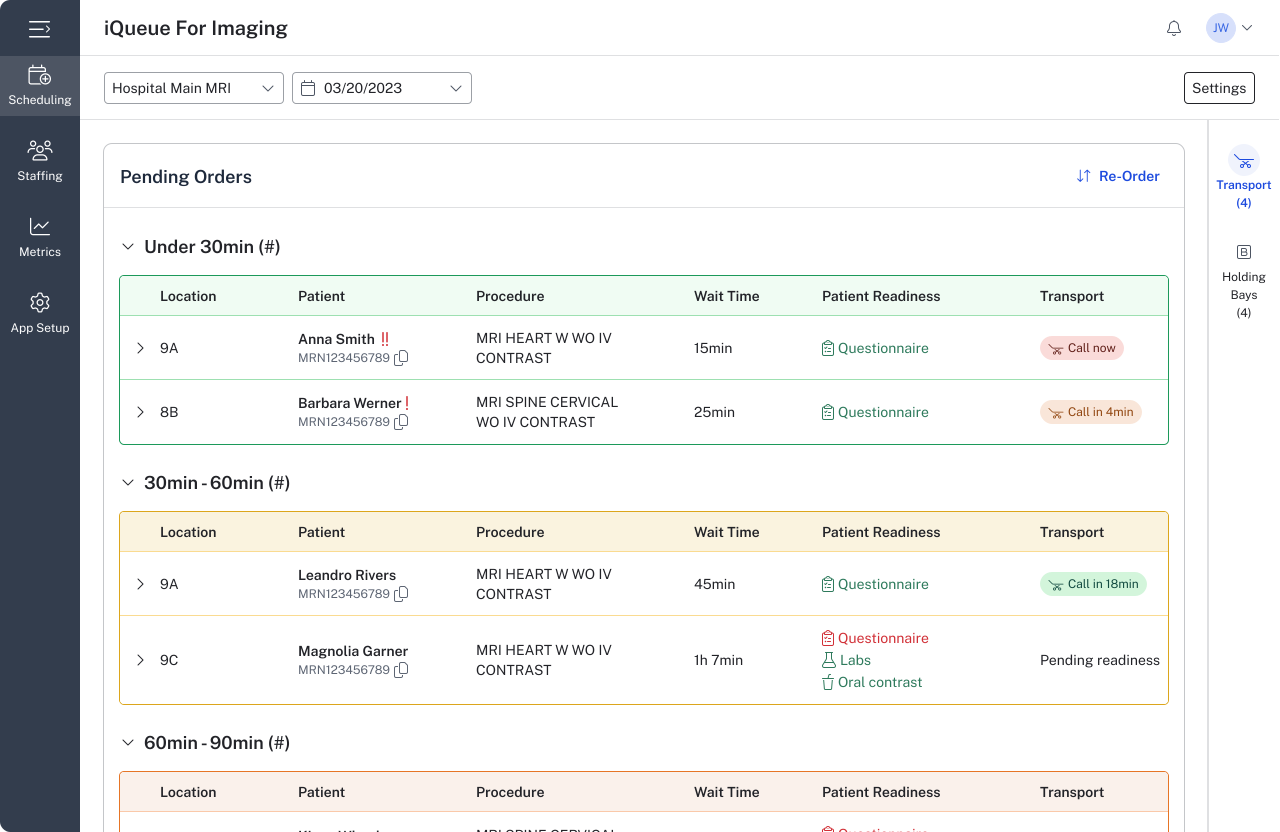

Designing Clinical Software Where Every Decision Carries Risk
How I helped launch a 0→1 imaging product that became the fastest $1M ACV in company history
PROJECT SNAPSHOT
Business impact
$2M ACV
in 2 months — fastest idea-to-revenue in company history
8+
piloting hospitals
1000+
MRIs & CTs optimized
Customer feedback
"This is life-changing, not just wonderful! Can we have it tomorrow?"
Physician Leader at Mount Sinai Hospital
"This is exactly what we've been dreaming about."
Head of Radiology at University of Kansas Health System
"I want this now. So excited to see this in real-time. This is really amazing!"
Senior Director of Radiology at Mount Sinai Hospital
Outcomes
Fastest $1M ACV in company history
Validated a new business opportunity
Adopted by major hospital systems
Scope
Cross-department clinical workflows
High-stakes decision environments
0→1 product development
My Role
Led design for the entire product line
Discovery → strategy → UX → validation
Cross-functional leadership
Timeline
Idea → $1M contract in two months
Concept → product in five months
Designing for hospitals isn't just about usability. it's about safety, liability, and trust.
When LeanTaaS expanded into imaging, we weren’t just launching a feature — we were entering a new clinical domain.
Every design decision had operational and legal implications
Every workflow impacted multiple departments
Every misstep could reduce trust
KEY TAKEAWAY
This case study shows how I navigated that complexity while helping build a new business line from scratch.
THE INITIAL FRAMING AND WHY IT WASN'T ENOUGH
Early discussions framed imaging as a prioritization problem
“We need better ways to prioritize patients and scans.”
But observing real workflows told a different story
Departments weren’t failing at prioritization. They were operating with fragmented visibility.
Nurses, providers, and imaging techs, each had partial information
Decisions were made locally without shared context.
KEY TAKEAWAY
The team thought imaging needed better prioritization. My research showed the real problem was fragmented visibility across departments.
REFRAME FROM PRIORITIZATION TO VISIBILITY
Instead of building a smarter ranking system, I reframed the problem around shared operational visibility.
If everyone saw the same reality, coordination would improve naturally.
Control
Coordination
Pushing decisions
Enabling them
I enhanced ranking systems with contextual visibility so teams could coordinate based on shared operational truth. This reframe shaped every downstream decision.
How might we better prioritize imaging orders so that patients get the care they need in time?
How might we give every department shared visibility into imaging status so they can coordinate proactively instead of reacting too late?
THE BIGGEST RISK: CLINICAL SKEPTICISM
Entering imaging meant asking hospitals to trust a brand-new system in a clinical environment. The risk wasn’t just UX failure. It was clinical skepticism. So I didn't design in isolation. I validated continuously with:

Imaging teams

Providers

Nurses

Hospital leadership & clinical SMEs

Earning clinical trust
When I first presented the concept to a partner hospital, the reaction wasn’t excitement — it was skepticism. They told us to walk through their workflow step by step before we build the tool.

The hospital leadership and clinical SMEs wanted to ensure we fully understood:
Cross-department dependencies.
Real bottlenecks.
How decisions actually get made.
So we slowed down. I mapped their workflows, reviewed pain points in detail, and validated assumptions across teams. Those sessions didn’t just refine the product. They built credibility.

This is their current state workflow.

This is the future state after they implement our tool.
KEY TAKEAWAY
In clinical environments, trust isn’t assumed — it’s earned through accuracy.
I PRESSURE-TESTED WHETHER VISIBILITY — NOT CONTROL — WAS TRULY THE LEVER
If nurses know a time-range in which their patient will be called, they can prepare them on time.

If providers understand delays are due to unforeseen circumstances, they escalate less.

If imaging teams don't have to constantly explain status, throughput improves.

Result: Cross-department patient care orchestration.
KEY TAKEAWAY
Before scaling, I validated the concept across departments to ensure real-world resonance.
MAKING DELAYS UNDERSTANDABLE
Orders often looked delayed without context and teams escalated prematurely.
But delays had valid reasons:
Patient not ready
Labs pending
Transport constraints
Clinical considerations
I reframed delays as information, not blame, and designed the system to show why something was waiting — not just that it was waiting. Design focused on:
Clear readiness signals

Transparent statuses

Actionable next steps
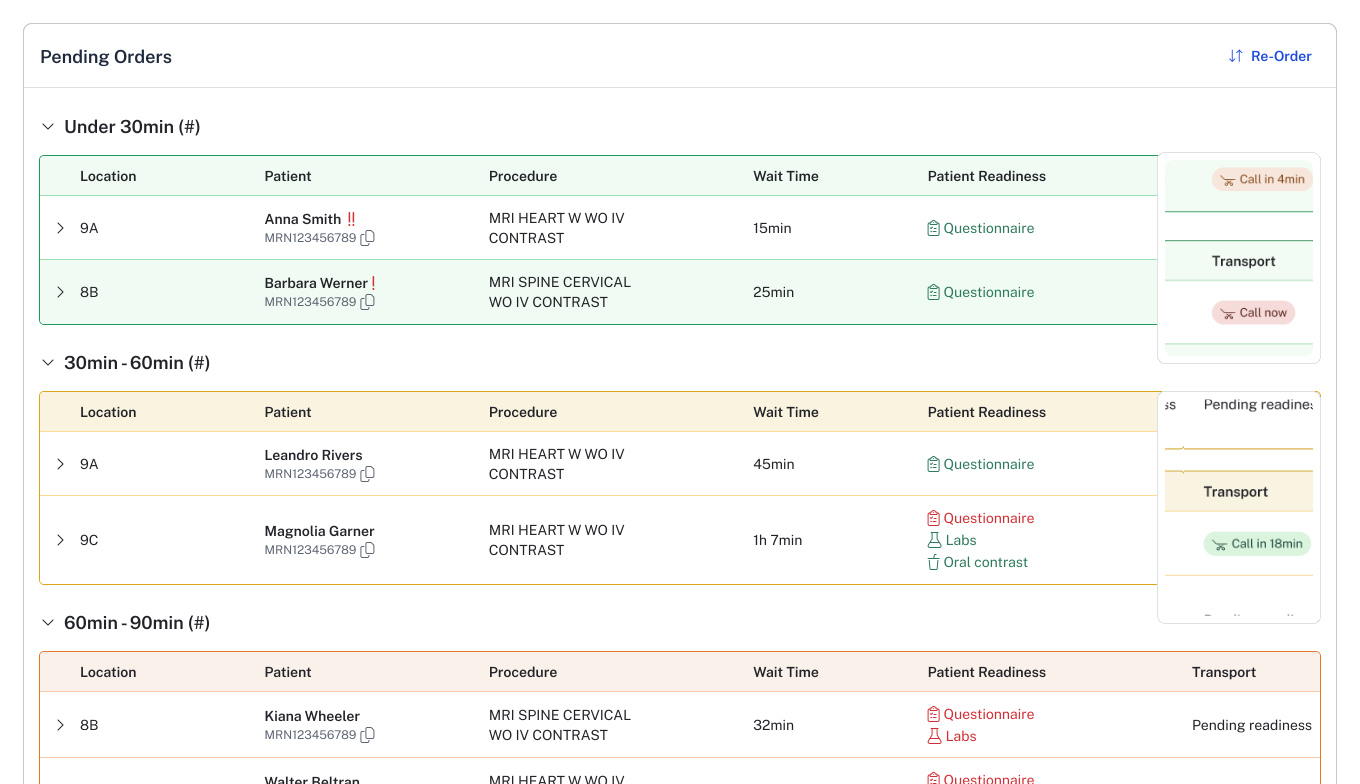
Result: Delays are understood, not penalized. This reduced friction and unnecessary escalation.
KEY TAKEAWAY
Context reduced tension more effectively than stricter prioritization rules.
THE HARDEST DECISION: DESIGNING UNDER CLINICAL RISK
Here’s where real tension appeared. We had to decide whether our product would act as a system of record for clinical readiness.
Saying yes would:
Give users more power
Increase traceability
Satisfy some stakeholders
It would also:
Introduce clinical liability
Slow workflows
Blur responsibility boundaries
Risk adoption
Stakeholders pushed for:
Full audit trails
Editable documentation
Detailed tracking
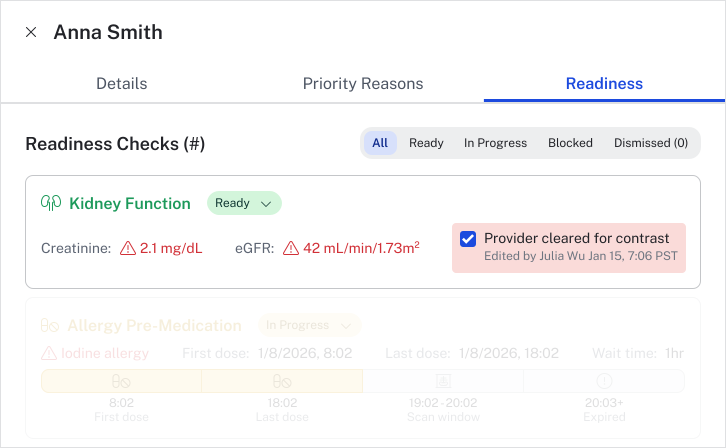
I advocated for restraint and limited scope to avoid becoming a system of record:
Minimal manual documentation - all readiness checks are automatic through AI chart mining.

Non-editable timestamps. If the information is wrong, users have to change it in the EHR (their system of record).

Simplified clearance states instead of full audit trails.
This was a deliberate trade-off between:
User autonomy
Operational efficiency
Organizational risk
KEY TAKEAWAY
I chose adoption and safety over feature depth. Not building something was the right decision.
We didn’t just land a $1M contract. We proved where the company could go next
Imaging showed that LeanTaaS could expand into a new clinical domain, solve a real operational problem, and do it in a way hospitals could trust. That success mattered beyond one product:
It validated imaging as a business opportunity.
It helped open a new line of innovation.
Proved that strong product judgment can create momentum even in environments shaped by safety, liability, and skepticism.
KEY TAKEAWAY
The result was not just revenue. It was strategic credibility.
The kind of product judgment high-stakes systems demand
In clinical environments, the hardest design decisions are rarely about interface polish. They are about scope, responsibility, and restraint. This project is a good example of how I work:
I reframe the problem before solving it.
I validate in the real environment.
I protect adoption by keeping the product inside the boundaries it can responsibly own.
KEY TAKEAWAY
In high-stakes domains, the best design decision is often the boundary.